







FAQs about Twinwall, Triplewall, & Multiwall Polycarbonate
Q. What is the lead time for orders?
A. Orders are processed and shipped within 5 – 7 days from the receipt of a purchase order.
Q. What colors are available for polycarbonate sheets?
A. Multiwall polycarbonate sheets typically come in standard colors such as Clear, Bronze, and Opal. Depending on the manufacturer, additional colors like White, Softlite, and Hammered may also be available. Special orders can accommodate Blue and Green options. Furthermore, corrugated polycarbonate is available in a variety of colors.
Q. What is the longest polycarbonate sheet available in stock?
A. The longest polycarbonate sheet available is 48′. All orders are custom-cut to meet customer specifications. For optimal shipping rates, we recommend ordering sheets that are 24′ or shorter.
Q. What are the widths of the polycarbonate sheets in stock?
A. Sheet Widths:
- Agrilite: 3″
- Trusscore: 16″
- Corrugated: 50″ and 74″
- Multiwall: 47.25″, 48″, 71.25″, & 72″
Custom widths can be requested through special orders.
Q. How will the polycarbonate panels be shipped?
A. Each order is securely packaged in a custom-built wooden crate that holds up to 2,000 pounds of product. The materials are then shipped via LTL carrier, selected based on the best shipping rate available.
Q. What shipping carrier do you use for your panels?
A. We utilize either a common carrier or our own full-service freight transport company for reliable shipping.
Q. How do you cut multiwall panels?
A. To cut multiwall panels effectively, use a razor knife or a circular saw equipped with a carbide-tipped blade featuring a triple chip grind tooth design. Always support and clamp the panels to reduce vibration during the cutting process. Feed the sheets through the saw slowly to prevent chipping while ensuring steady movement to avoid heat buildup.
Q. What is the best way to cut corrugated polycarbonate sheets?
A. A circular saw is recommended for straight, long cuts. Use a vertical band saw or a handheld jigsaw for curved cuts, always ensuring a fine-toothed blade is employed. Cutting should be executed at high speeds with a low advance rate for optimal results. When making sharp turns, drill a hole where cuts will intersect before cutting through the hole. Properly supporting and clamping the sheets will help minimize vibration.
Q. What is the difference between “corrugated polycarbonate” and “multiwall polycarbonate” sheet profiles?
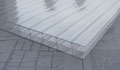
A. Corrugated polycarbonate is a single-layer sheet distinguished by its wave or box-type profile, reminiscent of traditional metal roofing with “peaks and valleys.” In contrast, multiwall polycarbonate features a rectangular hollow structure consisting of “flutes” that run along the length of the sheet. Multiwall options come in various configurations, including twinwall, threewall, and fivewall x-structure designs.
Q. What type of screw should I use when installing polycarbonate panels?
A. Choosing the right fastener is crucial for a secure installation. For wooden structures, we recommend using a #12 woodmate screw. For metal applications, such as aluminum or steel, a #12 self-drilling screw is ideal. Ensure that fasteners penetrate the roof or wall of your structure by at least one inch for optimal performance.
Q. Do I need to use a washer with the screws?
A. Yes, it is essential to use a washer with your screws. We recommend a minimum of a 1/2″ non-conductive EPDM bonded washer, although larger washers are acceptable. The washer’s outside diameter should not be less than 1/2″.
Q. What type of sealant should be used on sheets?
A. When applying sealant to polycarbonate sheets, always use a “100% silicone” sealant. Silicone sealants are UV resistant, do not degrade in sunlight, and effectively resist mold and mildew. They retain flexibility, accommodating any movement in the building. Avoid using roofing caulk, as incompatible sealants can lead to inadequate adhesion, overly rigid bonds, or contain chemicals that may discolor or damage the polycarbonate sheet.
Always check the product information on the sealant label to ensure compatibility before use.
Q. What are polycarbonate H- and U-Channels used for?
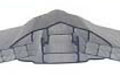
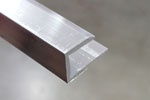
A. A polycarbonate H-Channel serves to join two multiwall polycarbonate sheets together, creating a seamless and professional appearance. Meanwhile, a polycarbonate U-Channel is utilized to cap the top and bottom of a multiwall polycarbonate sheet, effectively preventing dust, bugs, and moisture from infiltrating the flutes.
Q. How can I get my H- or U-Channel to slide onto the sheet?
A. To facilitate sliding the H- or U-Channel onto the edge of the multiwall sheet, try rubbing a bar of hand soap or applying a small amount of mild liquid dish detergent along the edge. This will help lubricate the surface. If necessary, use a putty knife to gently pry open the channel profile. Once the profile is securely installed, wipe away any excess soap with a soft, damp cloth.
Q. Can panels be nailed into place instead of screwing?
A. It is not advisable to nail polycarbonate sheets in place instead of using screws. Polycarbonate materials naturally expand in warm weather and contract in cooler conditions. To accommodate this thermal movement, it is crucial to pre-drill and screw panels into place.
Q. Is it necessary to pre-drill holes before installing polycarbonate sheets?
A. Pre-drilling is essential when installing polycarbonate sheets! This process allows for proper expansion and contraction due to temperature fluctuations. Neglecting to pre-drill can lead to warping or cracking around the screw holes.
Q. Are there any products that can help keep heat out?
A. All AmeriLux sheets are UV protected; however, their ability to block heat can vary. Clear panels, for instance, will allow more heat to pass through than tinted options. To effectively reduce heat gain, consider selecting a multiwall polycarbonate sheet designed with thermal insulation properties.
Q. How do you clean polycarbonate sheets?
A. For cleaning polycarbonate sheets, use a mild household detergent alongside a soft rag. Avoid using aggressive or abrasive cleaning agents, as well as glass window cleaners, as these can chemically harm the sheets.
Q. Can you walk on polycarbonate sheets during installation?
A. No, it is not safe to walk directly on polycarbonate sheets. These materials are not designed to support a person’s weight. Instead, use stepping ladders or incorporate crawling boards between two or more rafters to create a safe walking surface during installation.
Q. How do I bond two pieces of polycarbonate sheets together?
A. Polycarbonate sheets can be bonded through several methods, including adhesive bonding, solvent bonding, or mechanical fastening. For optimal optical clarity, we recommend using Urethane Laminating Film. If optics are not a concern, GE Silicone RTV108 or GE Silicone Construction Grade 1200 are excellent choices.
Q. What is the difference between direct light and diffused light?
A. Direct light is intense and bright, emanating from a single source in one direction, which results in sharp, defined shadows and minimizes three-dimensional detail. On the other hand, diffused light is softer, lacking the intensity and glare of direct light. It scatters in multiple directions, spreads over surfaces, reflects around objects, and creates gentle, non-harsh shadows.
Q. What is the better polycarbonate choice for a hobby greenhouse: multiwall or corrugated polycarbonate?
A. The best choice between multiwall and corrugated polycarbonate panels for your hobby greenhouse depends on your climate, greenhouse style, and whether you’ll be using it year-round. Both options are lightweight, durable, and user-friendly, while also providing UV protection to minimize yellowing and deterioration from sunlight.
Corrugated panels are generally less expensive but feature single-wall construction, which offers less heat retention. If you require better insulation and energy efficiency, opt for multiwall panels, as their construction improves thermal performance, making the additional investment worthwhile.
Q. What is LEED?
A. Leadership in Energy and Environmental Design (LEED) is a third-party building certification process established by the U.S. Green Building Council. This internationally recognized program highlights best-in-class building practices and serves as a standard for measuring sustainability in construction. LEED employs a performance-based rating system with four certification levels: Certified, Silver, Gold, and Platinum.
Q. Do I need special tools to install Trusscore Liner Panels?
A. No special tools or training are required to install Trusscore panels. The innovative tongue-and-groove interlocking system allows for quick and easy vertical or horizontal installation.
Use a fine-tooth blade (12 – 16 teeth per inch) installed in reverse for cutting panels. Fasten down the center of the slots using a drill/screw gun, leaving a minimum of 1/16″ between the back of the fastener head and the nailing flange to accommodate expansion and contraction.
Q. Are multiwall polycarbonate panels strong?
A. Yes, multiwall polycarbonate is both lightweight and exceptionally durable, boasting impressive impact resistance. These panels are 10 times stronger than acrylic, 200 times stronger than glass, UV-protected to maintain clarity and mechanical properties, and virtually unbreakable, making them a versatile choice for many glazing applications.
Q. What can I use to cover the gap at the peak of a post-frame building?
A. A polycarbonate ridge cap is an ideal solution for covering the junction where two roofing panels meet, effectively keeping snow and rain out of the building while allowing natural daylight to enter through the peak.
Q. What is a Lexapanel™ Standing Seam Panel?
A. Lexapanel is a polycarbonate panel characterized by its raised edges. A polycarbonate batten snaps over the raised edge of two adjacent panels to create a seam. Lexapanel provides the strength, weather resistance, clarity, and thermal insulation associated with Lexan Thermoclear polycarbonate multiwall sheets.
Q. What is the minimum square footage for ordering Lexan Thermoclick in special colors?
A. To order custom or special colors of Lexan Thermoclick, a minimum order of 2,730 square feet or 43 sheets of stock lengths is required. Available special-order colors include Yellow, Orange, Red, Green, Purple, SCIR Blue, SCIR Green, and SCIR Grey, while AmeriLux stocks Lexan Thermoclick in Clear, Opal, and Blue.
Q. Which of your products would you recommend for a garage’s interior walls and ceilings?
A. For garage interiors, we recommend PVC Liner Panels. These lightweight panels are easy to install and feature a bright white finish that enhances the workspace. PVC is highly resistant to chemicals, moisture, and mold, making it virtually maintenance-free. They never require painting or refinishing and can be easily cleaned with soap and water.
Q. Why is there a film on the polycarbonate sheets?
A. The masking film on polycarbonate sheets serves to protect them from scratches and damage during transport, fabrication, and installation.
Q. Should I remove the masking film before cutting a polycarbonate sheet?
A. No, you should leave the masking film in place until installation. It indicates the UV-protected side that must face outward toward the sun. The masking should remain on during all phases of fabrication and installation.
Before installation, remove about two inches of film from the edges of the sheet. Remember to remove all remaining masking immediately after installation. To prevent heat buildup, store sheets in a cool, dry place away from direct sunlight. Installing sheets with the wrong side facing out will void the warranty.
Q. What can I do if the film is stuck to the polycarbonate sheet?
A. If the masking film is stuck to the polycarbonate sheet, gently rub it with a soft cloth dampened with Fels-Naptha or isopropyl alcohol. Carefully pull off the film and follow this with a mild soap cleaning and thorough rinse with water. Avoid using other chemicals or sharp objects to remove the masking.
Fels-Naptha can usually be found at local hardware stores.
Q. Where can polycarbonate sheets be purchased?
A. To purchase polycarbonate sheets, please contact our customer service department at (888) 602-4441, and we will direct you to the nearest distributor.
Q. How do I clean out the debris from the interior wall “flutes” of a multiwall sheet?
A. When cutting multiwall polycarbonate to size, small particles of dust or plastic may become lodged within the open flutes. Before installation, it’s important to clear this debris. You can remove it using a vacuum or by blowing it out with compressed air. Avoid flushing the flutes with water, as this may prolong drying time.
Q. Do I need to be concerned about thermal expansion and contraction when installing my polycarbonate panels?
A. Absolutely! Polycarbonate panels expand and contract with temperature changes. Expect approximately 1/32″ of movement per foot for every 100ºF change in temperature, with the most significant expansion occurring during Spring and Fall. Fastener holes should be oversized to accommodate this thermal movement.
Q. What is a daylighting system?
A. In architecture, daylighting refers to the controlled admission of natural light into a building to illuminate the interior spaces. The best daylighting systems allow for natural light without glare, ensuring visual comfort and well-being.
Daylighting promotes sustainable building design and is categorized into two main types: top lighting and side lighting, with skylights and translucent curtain walls serving as common examples.
Q. What is Lumira® Aerogel?
A. Lumira Aerogel is a dry silica particulate renowned for being a recyclable, lightweight insulation material that repels water and maintains its properties under compression. This innovative material provides exceptional thermal insulation and light diffusion.
Cradle-to-Cradle certified, Lumira Aerogel is designed to optimize light transmission in daylighting applications and is produced by the Cabot Corporation at its advanced manufacturing facility near Frankfurt, Germany.
Q. What are the benefits of filling polycarbonate multiwall panels with Lumira Aerogel?
A. The addition of Lumira aerogel significantly enhances multiwall polycarbonate daylighting systems by improving insulation factors, providing excellent light diffusion, boosting acoustic performance, reducing solar heat gain and loss, and lowering overall energy consumption.
Q. How thick is a corrugated polycarbonate sheet?
A. Coverlite MR9″ and MR12″ corrugated polycarbonate sheets are .035″ thick, while Lexan Greca (square wave) corrugated sheets measure .033 inches thick. These corrugated panels serve as exceptional coverings for patios, decks, or greenhouses, allowing filtered light to penetrate while safeguarding against the elements.
Q. Why is an anti-condensate feature important when choosing a greenhouse covering?
A. Condensation on the inner surface of a greenhouse covering can diminish light transmission and heighten the risk of plant diseases. An anti-drip or anti-condensate coating decreases surface tension, encouraging water to form a thin layer of condensation instead of droplets. This condensation is redirected down the sides of the greenhouse rather than dripping onto plants, leading to fewer diseases, reduced pesticide usage, and ultimately, higher quality plants.
Q. How should polycarbonate and PVC panels be stored and handled during winter?
A. While polycarbonate and PVC panels can be temporarily stored outside in rain or snow, it is essential to stack sheets on a raised platform and protect them from wind. Avoid exposing stacked sheets to direct sunlight despite the sun’s decreased strength in winter.
Cover them with an opaque, protective material to keep dirt and debris from entering the flutes. Ideally, panels should be stored in a dry, well-ventilated, shaded area. Before installation, bring the polycarbonate and/or PVC panels indoors, lay them flat (uncovered), and allow them to acclimate to the temperature of the installation room or an environment with similar climate conditions for at least 48 hours.
Q. What are closure strips?
A. Closure strips, typically made of foam or plastic, are designed to match the profile of corrugated panels. They seal openings where the corrugated polycarbonate sheet meets flat surfaces, effectively filling the gaps in corrugated roofing and sidewall applications. Closure strips offer a professional finish and enhance the weather-tightness of polycarbonate corrugated panels by preventing moisture, insects, and debris from infiltrating beneath the panels.
Q. Can polycarbonate or PVC be recycled?
A. Yes, both polycarbonate and PVC are recyclable materials. Whenever feasible, recycling is the preferred option over disposal or incineration. Dispose of these materials in accordance with federal, state, and local regulations.
Testing collected processing fume condensates and incinerator ash is important to determine their waste classification. Please note that the information provided serves as a general guideline; exact requirements may vary based on specific project needs.